
The 13th ARAB Film Festival
Opening Film
Program book DownloadDeserts
- Morocco, France, Germany, Belgium
- 2023
- 125min
- Fiction
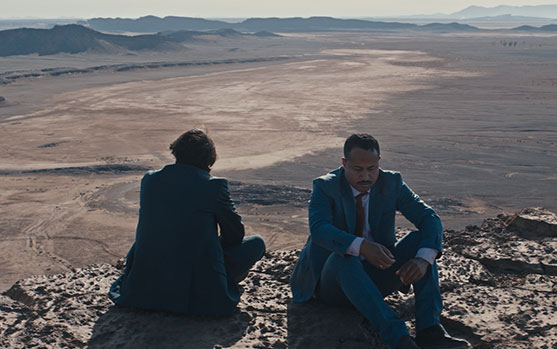
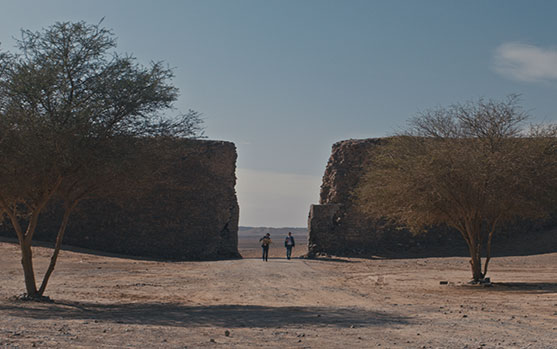
Longtime friends Mehdi and Hamid work for a debt collection agency in Casablanca. To punish them for their poor performance, their management sends them into the suffocating Moroccan Sahara to track down some bad payers. One day, in a gas station in the middle of the desert, a motorcycle parks in front of them. A threatening man is handcuffed to the luggage rack. This is the Fugitive. Their meeting marks the beginning of an unforeseen and mystical journey. World premiered at the 2023 Cannes Director’s Fortnight.

Director Faouzi Bensaïdi
After three short films that won awards in Cannes and in Venice, Faouzi Bensaïdi directed his first feature
film,
Moknèche.
Goodbye Julia
- Sudan
- 2023
- 120min
- Fiction
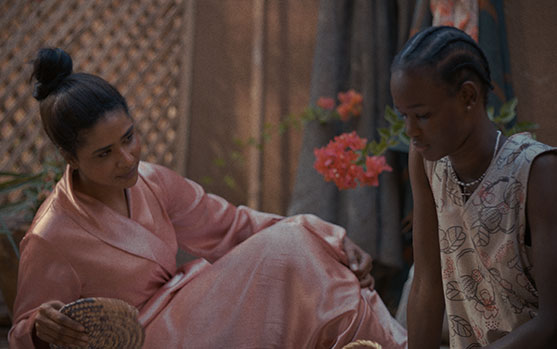
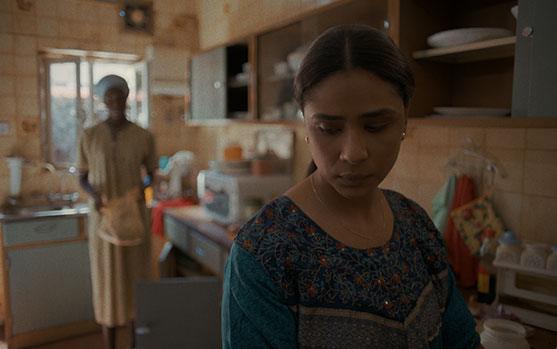
Wracked by guilt after covering up a murder, Mona a northern Sudanese retired singer in a tense marriage tries to make amends by taking in the deceased’s southern Sudanese widow, Julia, and her son, Daniel, into her home. Unable to confess her transgressions to Julia, Mona decides to leave the past behind and adjust to a new status quo, unaware that the country’s turmoil may find its way into her home and put her face to face with her sins. The first-ever Sudanese feature to screen at the Cannes Film Festival (Un Certain Regard) and has been selected by Sudan to represent the country at the Academy Awards in the Best International Film category.
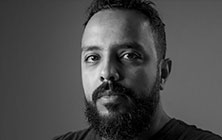
Director Mohamed Kordofani
A Sudanese filmmaker who made NYERKUK, KEJERS PRISON, and A TOUR IN LOVE REPUBLIC. NYERKUK won the Black
Elephant Award for Best Sudanese Film, NAAS Award for Best Arab Film at the Carthage Film Festival, Jury
Award at the Oran International Arab Film Festival, and Arnone-Belavite Pellegrini Award at the FCAAA in
Milan. KEJERS PRISON was screened during the Sudanese revolution at the sit-in square in front of thousands
of protesters. A TOUR IN LOVE REPUBLIC was the first pro-revolution film to be broadcasted on Sudan's
national TV. His latest film THIS IS SUDAN was commissioned by Sudan’s former prime minister to promote
Sudan's potential for investment.
Mohamed Kordofani is a Sudanese film director and screenwriter. His short film
The Teacher
- Palestine, Qatar, UK
- 2023
- 115m
- Fiction
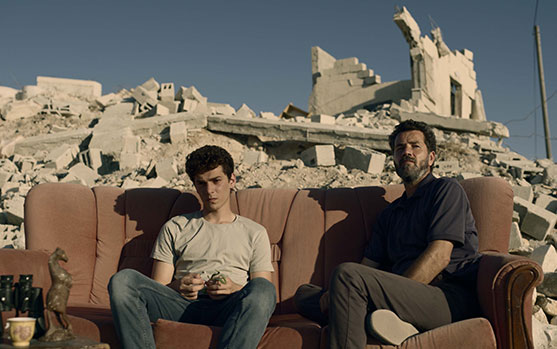
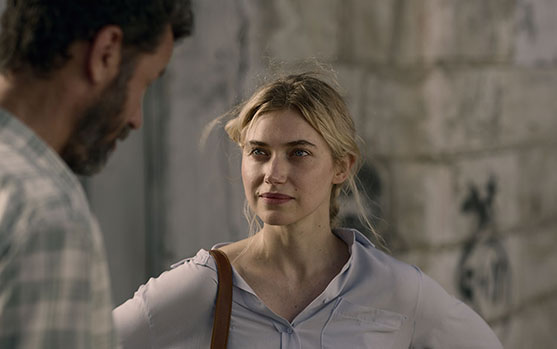
Palestinian schoolteacher Basem is deeply scarred by a tragic incident involving his son, which also led to the breakdown of his marriage. His life takes an unexpected turn as he forms a deep bond with Adam, one of his students, while also developing an unexpected connection with Lisa, a British social worker. Meanwhile, a prominent American lawyer and his wife are struggling to secure the return of their son, an Israeli soldier held captive by a Palestinian resistance group. The group's demand for a prisoner exchange escalates tensions with the authorities, intensifying the search for the soldier and plunging the neighborhood where Basem and Adam live into turmoil.

Director Farah Nabulsi
Farah Nabulsi is a Palestinian British filmmaker, born, raised and educated in the UK. She began her film
career in 2016 as a writer & producer of short fiction films, exploring topics that matter to her. This
includes
The Last Queen
- Algeria, Qatar, Saudi Arabia, France, Taiwan
- 2022
- 113min
- Fiction
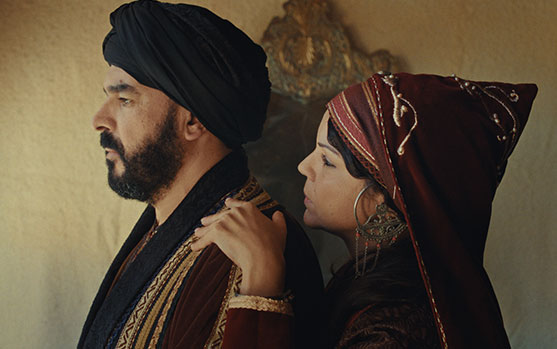
Algeria, 1516. The pirate Aruj Barbarossa frees Algiers from the tyranny of the Spanish and seizes power over the kingdom. Rumor has it he murdered the King Salim Toumi, despite their alliance. Against all odds, one woman will stand up to him: Queen Zaphira. Between history and legend, this woman’s journey tells of a struggle, of personal and political turmoil endured for the sake of Algiers. Director Adila Bendimerad co-wrote and co-directed with Ounouri and in which she also takes on the lead role as Queen Zaphira.


Director Adila Bendimerad
Adila Bendimerad is an Algerian actress, script-writer, director and producer, based in Algiers. In 2011,
the actress (The repentant, The Rooftops, Normal by Merzak Allouache, Still Burning by Georges Hachem)
created the company TAJ INTAJ in Algiers to promote young Algerian talent. Her production of

Director Damien Ounouri
Damien Ounouri is an Algerian director based in Algiers. He studied cinema theory, developing its practical
application as a self-taught skill. His documentary
Four Daughters
- Tunisia, Saudi Arabia, France, Germany
- 2023
- 110min
- Documentary
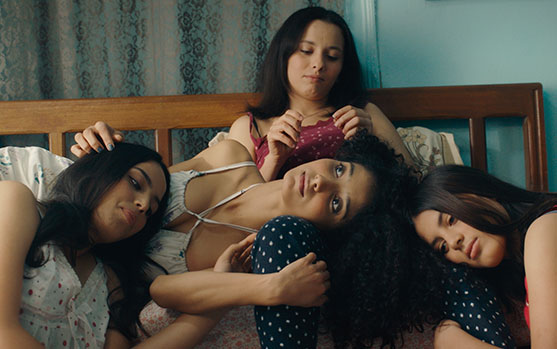
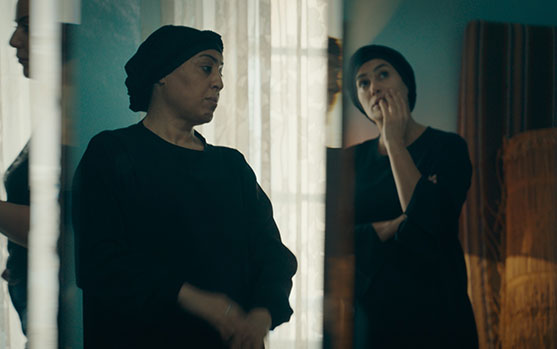
The life of Olfa, a Tunisian woman and mother of 4 daughters, oscillates between light and shadow. One day,
her two eldest daughters disappear. To fill their absence, director Kaouther Ben Hania calls upon
professional actors and sets up an ex- traordinary film mechanism to unveil the story of Olfa and her
daughters. An intimate journey full of hope, rebellion, vio- lence, intergenerational transmission and
sister- hood, which will question the very foundation of our societies. Kaouther Ben Hania competed for the
first time in the Official Selection at the 2023 Cannes with

Director Kaouther Ben Hania
Tunisian director Kaouther Ben Hania studied cinema in Tunisia and then in Paris - Femis and la Sorbonne.
Her previous film
Inshallah a Boy
- Jordan, Saudi Arabia, Qatar, France
- 2023
- 113’
- Fiction
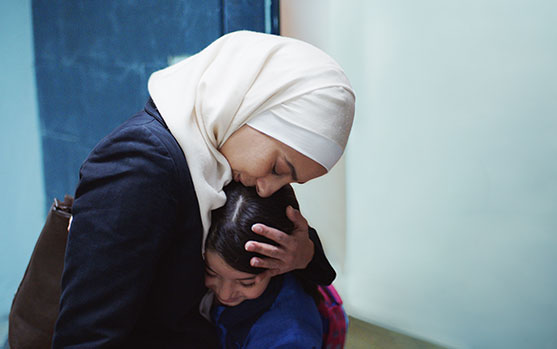
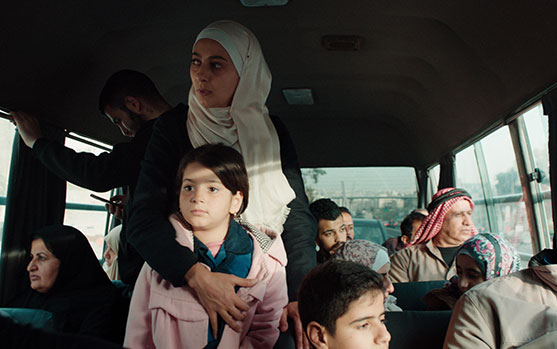
After the sudden death of her husband, Nawal is struggling to cope with the upheaval in her life. However, her pain is soon compounded by the possibility of losing her home to her brother-in-law. Desperate to keep her home and provide a stable life for her daughter, Nawal resorts to deception by faking a pregnancy. But as time passes, the lie becomes harder to sustain and Nawal faces a difficult choice. With only three weeks to find a solution, Nawal embarks on a journey that challenges her fears, beliefs, and morality, as she fights to secure her rightful inheritance and protect her daughter’s future.
Director Amjad Al Rasheed
Amjad Al Rasheed, a Jordanian director and writer born in 1985, has an MFA in Cinematic Arts with a concentration on Directing and Editing. In 2016 he was selected by «Screen International» as one of five «Arab Stars of Tomorrow» highlighting the up-and-coming young talents of the region. He attended the Talent Campus during the 57th Berlinale, after which he directed short films that garnered nominations and won prizes at various Arab and international film festivals.
Hajjan
- Saudi Arabia, Egypt, Jordan
- 2023
- 126min
- Fiction
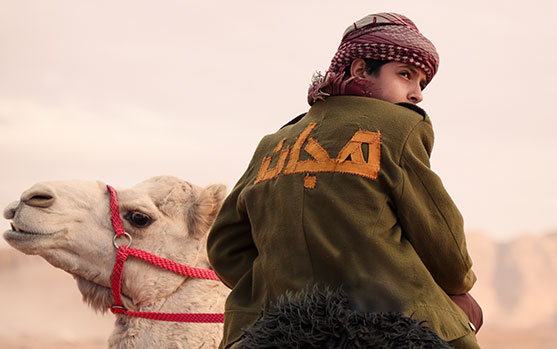
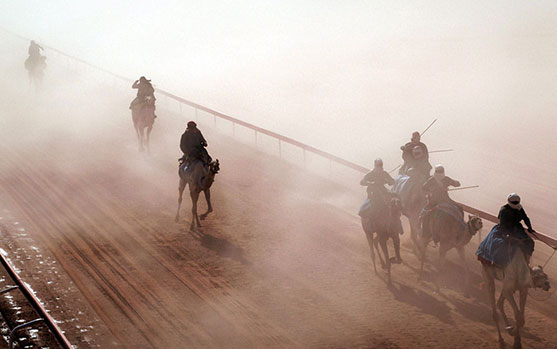
In the highly competitive world of desert camel racing, where Bedouin family legacies are forged, young Ghanim dreams of seizing victory in the annual Great Safwa Race in honor to his legendary grandfather, known only as Hajjan – “The Jockey”. But tragedy strikes when he is thrown from his mount by a mysterious rider in a golden headscarf, resulting in his tragic death. Witnessing his older brother's suspicious demise, orphaned Mattar vows to restore his family honor, embarking on a mission to become a Hajjan himself.
Director Abu Bakr Shawky
Director Abu Bakr Shawky is an Egyptian-Austrian writer and director. His short documentary
Ramad
- Oman
- 2023
- 21min
- Fiction
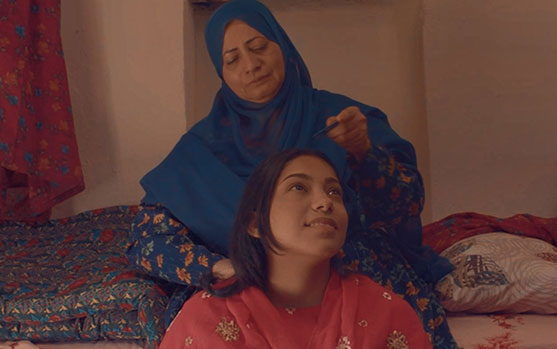
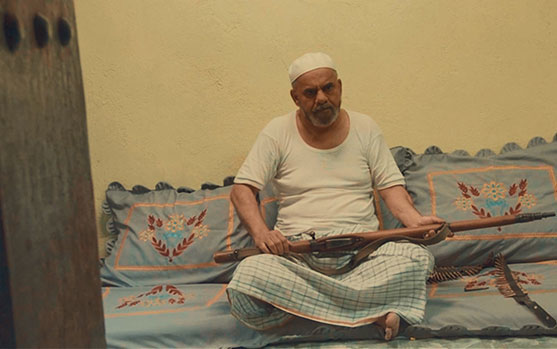
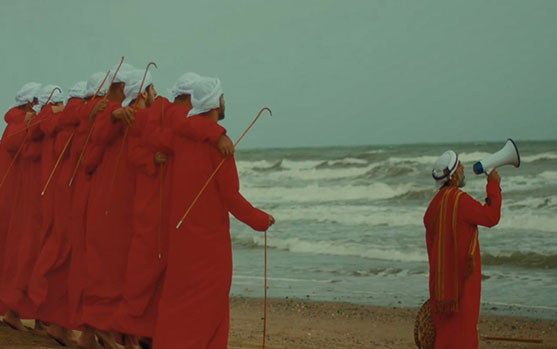
A story inspired by a true incident about a family living in a mountain village, where a medical examination reveals that their unmarried teenage daughter is pregnant, and then the family decides to kill and bury her to erase the shame, along with the doctor's attempt to save the situation by correcting the fault.
Director Suleiman Al-Khalili
Suleiman Al-Khalili is a director and writer of short narrative and documentary films, articles in the
field of cinema, and short stories. From 2017 to 2019, he was a chairman of Oman Film Society. In 2020, he
won the Third prize for Best Screenplay with
Water Religion
- Oman
- 2023
- 29min
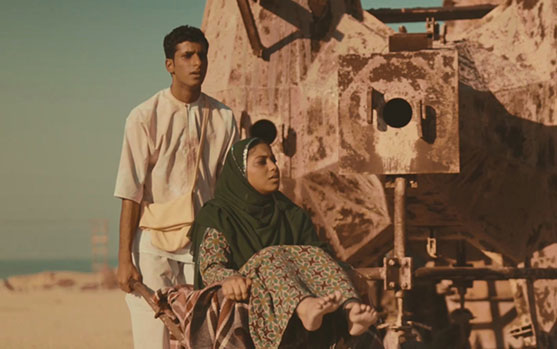
- Fiction

Director Haitham Sulaiman
Haitham Suleiman is a screenwriter and director, born in the Al Dakhiliyah Governorate of the Sultanate of Oman. He holds a BA in English from Sultan Qaboos University and the University of Queensland, Australia. He is a former member of the Board of Directors of Oman Film Society (2017-2021). Haitham began his film career in as a screenwriter for feature films, winning the Best Feature Film Screenplay Award for three consecutive years in Oman. He then wrote and directed 4 short films which screened and awarded at various local and international festivals in Oman, Iraq, Algeria, Bulgaria, and Sweden. He also wrote scripts for television series, both for traditional TV channels and online platforms.
Birds Paradise
- Oman
- 2023
- 14min
- Documentary
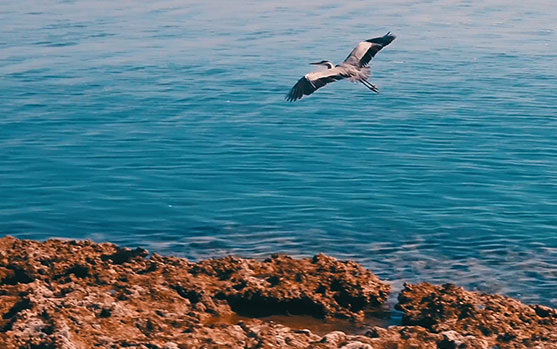
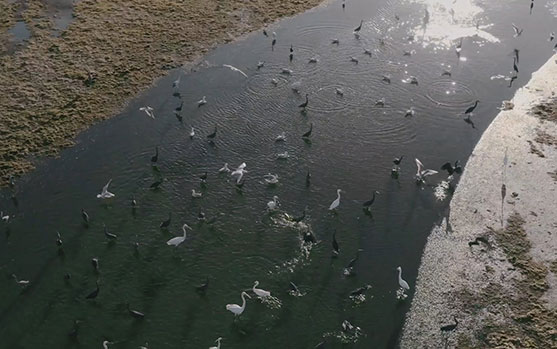
The film tells the story of why the region of Bur Alhikman is important for the migration birds. Within the film, both local people and environmental specialists will give the answers within shared conversations.
Director Abdullah Al-Raisi
Abdallah Al-Raisi is a director, screenwriter, documentary filmmaker, and a member of the Board of Directors of Oman Film Society. He has served on judging committees and worked as an assistant director on several documentary projects that have won both local and international awards. He is a graduate of the Broadcasting and Television Media Department and has participated in several training programs in filmmaking both within and outside the Sultanate.